
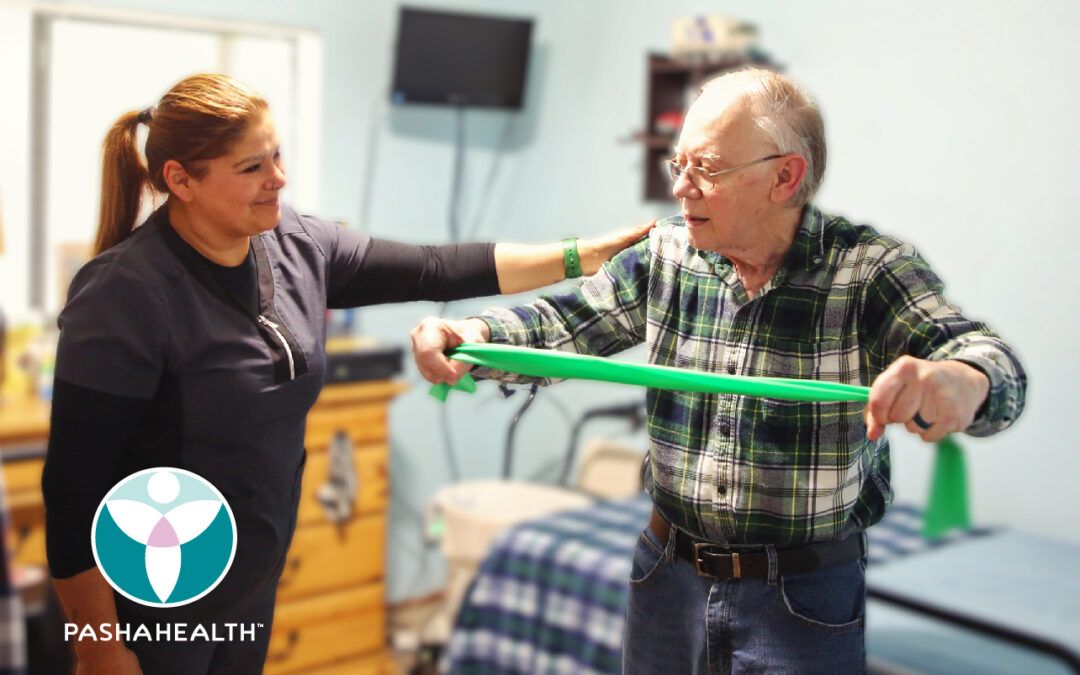
As we grow older, it’s easy to believe that slowing down is simply part of the process. Aging is inevitable; losing strength and energy is not. Staying active is one of the most powerful things you can do for your health, your mobility, and your independence, and it’s never too late to begin. Here’s the practical version, the one we use with our own clients around Salem.
Why movement matters more, not less, after 65
- It preserves strength and mobility. Regular activity maintains muscle mass, joint flexibility, and bone density, the raw materials of independence.
- It prevents and manages chronic conditions: heart disease, type 2 diabetes, osteoporosis, and some cancers all respond to movement.
- It improves balance and coordination, which directly lowers fall risk. Falls are the leading cause of injury in older adults, and most are preventable.
- It protects the brain. Physical activity is linked to better memory, faster thinking, and lower dementia risk.
- It lifts mood, energy, and sleep. Exercise measurably eases depression and anxiety at every age.
The four kinds of exercise to combine
- Aerobic: walking, swimming, cycling, dancing. Aim toward 150 minutes of moderate activity a week, in whatever pieces fit your life. Salem’s Riverfront Park and Minto-Brown Island paths are flat, paved, and made for this.
- Strength: resistance bands, light dumbbells, or bodyweight moves like sit-to-stands from a sturdy chair, two or three times a week. Muscle is what gets you off the floor and up the stairs.
- Flexibility: gentle stretching or yoga keeps everyday movements, reaching a shelf, tying a shoe, from becoming projects. This matters doubly if you live with arthritis or mobility limits, where the right movement reduces stiffness rather than aggravating it.
- Balance: tai chi, heel-to-toe walking, or standing on one foot near a counter. A few minutes a day meaningfully cuts fall risk, and balance work is especially important for anyone managing Parkinson’s.
How to start (and actually keep going)
- Start small. Five to ten minutes counts, and it builds. The first week’s goal is showing up, not performance.
- Pick something you enjoy. The best exercise is the one you’ll still be doing in March.
- Set reachable goals and notice progress. Around the block this month, around the park next month.
- Make it social. A walking partner or a class at Center 50+, Salem’s senior center, turns exercise into something you look forward to.
- Be kind to yourself. Missed days happen. Start again the next morning without the lecture.
The common barriers, honestly answered
“I don’t have the energy.” Ironically, regular movement raises energy and reduces fatigue within a few weeks. Start smaller than feels necessary.
“I have health issues.” Talk with your doctor first, then adapt rather than abstain. Nearly every condition has a safe movement plan; chair-based versions exist for almost everything above.
“I’m afraid of falling.” This one deserves respect, because fear of falling leads to less movement, which leads to more falls. The answer is supported activity: balance work near a counter, a walking companion, cleared walkways at home.
“I can’t get anywhere.” If driving is the obstacle, our transportation service takes clients to gyms, pools, and classes, not just medical appointments.
Where a caregiver fits in
Plenty of our clients are perfectly capable of exercising; what they lack is a steady partner. A caregiver who walks with you, spots the balance practice, and actually makes the routine happen on gray February mornings is often the difference between intending and doing. That’s a normal part of companionship visits, and for clients recovering from surgery or a hospital stay, we build movement into the care plan deliberately.
One honest note about the Willamette Valley: the enemy of senior fitness here isn’t summer, it’s the long gray stretch from November to April. Plan for it deliberately. An indoor walking route (Salem Center works), a chair-exercise video for rainy days, and a standing appointment with another person are what carry a routine through an Oregon winter.
Staying active isn’t about adding years to your life, though it does. It’s about adding life to your years: the strength to garden, the balance to shower confidently, the stamina to enjoy your grandchildren. If someone you love needs a hand making that happen at home, we’re a short conversation away.